Donor offer desk
Make one-off and recurring offers visible with quantity, collection window and handling information.

A better destination for good food
Connect surplus to the kitchens and community teams who can use it.
Less waste in the gap. More purpose in the journey.
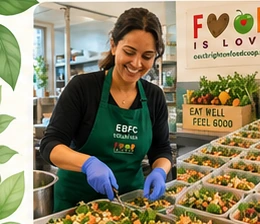
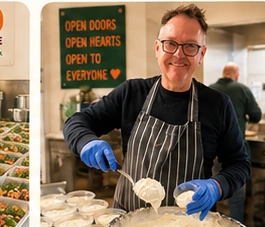
Food Loop starts with a practical question: what is available, who can use it and how does it get there?
Bring donor offers, collections and kitchen needs into working view. Give good intentions a route.
Community programme / digital developmentAn illustrative allocation board
01 / AVAILABLE OFFERS
02 / A POTENTIAL DESTINATION
Check dietary suitability, quantities, storage and collection timing before accepting the sample vegetable offer.
Human confirmation requiredThe coordination behind the purpose
Donors. Kitchens. Drivers. Community partners. Keep the handovers practical and the evidence useful.
Make one-off and recurring offers visible with quantity, collection window and handling information.
Connect useful supply with the receiving kitchen’s needs and capacity.
Match an offer to volunteer availability and a named collection owner.
Build a dependable daily, weekly or monthly contribution rhythm with each partner.
Keep the offer, collection and kitchen receipt connected in one contribution record.
Show partners what was contributed and what happened next, backed by service records.
The investment conversation
Food Loop builds on community relationships and practical collection work. Its digital ambition is coordination: make the local network easier to run, then understand which parts can be repeated elsewhere.
Commercial direction
A partner-supported community programme and coordination layer. The commercial direction centres on commissioned operation, sponsorship and service-network support, with the model agreed with participating operators.
The next proof point
Validate reliable donor-to-kitchen handovers. Measure collection effort and usable contributions. Establish a recurring partner route and reporting rhythm.